
Apr . 01, 2024 17:55 Back to list
Plug in Hybrid Products Technical Architecture and Performance Analysis buy plug in hybrid products
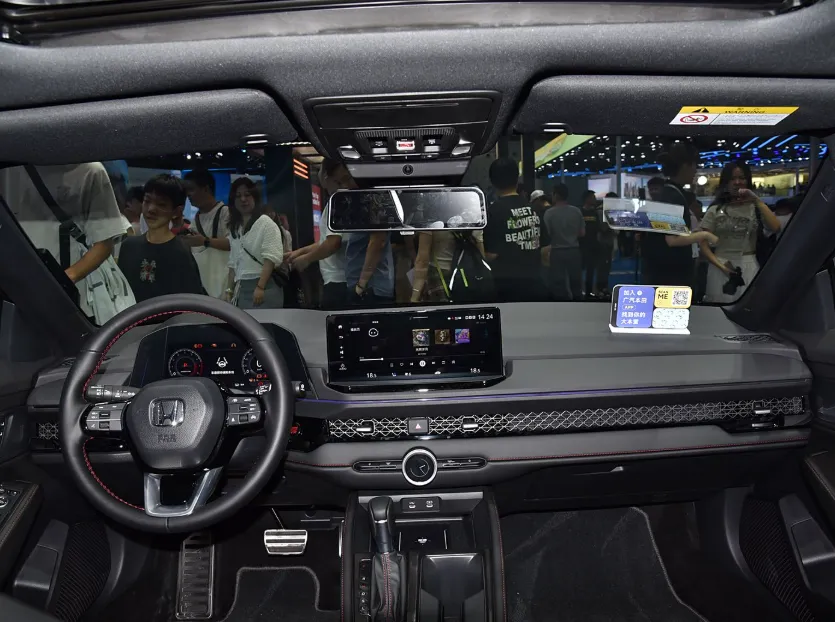
Plug-in Hybrid Electric Vehicles: Technical Architecture and Performance Analysis
Plug-in Hybrid Electric Vehicles (PHEVs) represent a sophisticated convergence of internal combustion engine (ICE) technology and high-voltage battery energy storage systems. Positioned as a transitional bridge between conventional hybrids and battery electric vehicles (BEVs), the PHEV architecture is defined by its ability to be recharged via an external electrical power source. In the automotive industrial chain, PHEVs integrate complex power electronics, advanced thermal management systems, and dual-propulsion powertrains. The core technical objective of a PHEV is to optimize the "Electric-First" operational mode, maximizing the All-Electric Range (AER) while mitigating "range anxiety" through a secondary liquid-fuel energy reservoir. This synergy requires precise calibration of the Energy Management System (EMS) to balance torque distribution between the electric motor and the ICE, ensuring optimal fuel economy and reduced carbon emissions without compromising vehicle dynamics.
Material Science & Manufacturing
The manufacturing of plug-in hybrid products necessitates the integration of advanced materials to manage the conflicting requirements of high energy density, structural rigidity, and thermal stability. At the core of the system is the Traction Battery Pack, typically utilizing Lithium-ion (Li-ion) chemistry, such as Nickel Manganese Cobalt (NMC) or Lithium Iron Phosphate (LFP). The selection of NMC is preferred for high-performance PHEVs due to its superior energy density (Wh/kg), whereas LFP is employed where thermal stability and cycle life are prioritized. These cells are encased in aluminum alloy housings, often utilizing 6000-series alloys for their optimal strength-to-weight ratio and corrosion resistance.
Manufacturing processes involve high-precision laser welding for battery tab connections to minimize electrical resistance and heat generation. The power electronics, specifically the Inverter and DC-DC converter, utilize Silicon Carbide (SiC) semiconductors instead of traditional Silicon (Si) IGBTs. SiC allows for higher switching frequencies and can operate at higher temperatures, significantly reducing the size of the cooling system. The powertrain assembly involves complex mating of the electric motor (permanent magnet synchronous motors) with a specialized transmission—often a planetary gear set or a dedicated hybrid transmission—which requires micron-level tolerances to prevent parasitic losses. Furthermore, the chassis often incorporates high-strength steels (AHSS) and carbon-fiber reinforced polymers (CFRP) in strategic areas to offset the additional mass of the battery pack, maintaining a center of gravity that ensures vehicle stability.

Performance & Engineering
Engineering a PHEV requires a multi-domain analysis of energy flow and force distribution. The primary engineering challenge lies in the Thermal Management System (TMS). Because the battery, power electronics, and ICE each have different optimal operating temperatures, a complex network of heat exchangers and coolant loops is required. Active liquid cooling, utilizing ethylene glycol-water mixtures, is employed to prevent thermal runaway in the battery pack during rapid DC charging or high-discharge acceleration phases.
From a force analysis perspective, the integration of the electric motor allows for instantaneous torque delivery, which must be blended seamlessly with the ICE's torque curve. This is achieved through the Power Split Device (PSD), which manages the mechanical energy flow. Compliance requirements mandate rigorous electromagnetic compatibility (EMC) testing to ensure that the high-voltage system (typically 300V to 800V) does not interfere with the vehicle's low-voltage control electronics (12V). Additionally, the regenerative braking system is engineered to recover kinetic energy during deceleration, converting it back into chemical energy in the battery, which requires a sophisticated brake-by-wire system to manage the transition between friction braking and regenerative braking without compromising safety or pedal feel.
Technical Specifications
| Technical Parameter | PHEV Standard (Mid-Size) | Performance PHEV | Efficiency-Focused PHEV | Testing Metric/Unit |
|---|---|---|---|---|
| Battery Capacity | 13 - 18 kWh | 20 - 30 kWh | 10 - 15 kWh | Kilowatt-hour (kWh) |
| All-Electric Range (AER) | 40 - 60 km | 80 - 110 km | 30 - 50 km | Kilometers (km) |
| Energy Density | 160 - 200 Wh/kg | 220 - 260 Wh/kg | 140 - 180 Wh/kg | Watt-hour per kg (Wh/kg) |
| Charging Voltage | 230V / 3.3kW AC | 400V / 7kW+ AC/DC | 230V / 3.6kW AC | Volts/Kilowatts (V/kW) |
| System Efficiency | 85% - 90% | 82% - 88% | 90% - 94% | Percentage (%) |
| Thermal Range | -20°C to 60°C | -30°C to 70°C | -20°C to 50°C | Celsius (°C) |
Failure Mode & Maintenance
The failure modes of PHEV systems are more complex than traditional ICE vehicles due to the coexistence of chemical, electrical, and mechanical energy systems. A critical failure mode is Battery Degradation (Capacity Fade), often caused by deep discharge cycles or exposure to extreme temperatures, leading to an increase in internal resistance and a decrease in AER. Another significant risk is "Contact Oxidation" or corrosion in the high-voltage charging port, which can lead to increased resistance and thermal hotspots during charging, potentially triggering a safety shutdown of the On-Board Charger (OBC).
Mechanical failures often manifest as "Seal Degradation" in the hybrid transmission, where the mixing of lubricants or leakage of coolant into the oil sump can lead to premature wear of the planetary gears. Furthermore, "Insulation Failure" in the high-voltage cabling can occur due to vibration-induced abrasion, necessitating the use of an Insulation Monitoring Device (IMD) to detect leakage currents. Professional maintenance requires specialized high-voltage certification (e.g., NFPA 70E) and includes the use of dielectric tools. Maintenance protocols emphasize the periodic flushing of the cooling system and the updating of the Battery Management System (BMS) firmware to optimize cell balancing and state-of-charge (SoC) estimation algorithms.
Industry FAQ
Q: How does the degradation of the traction battery affect the long-term resale value of the PHEV?
A: Battery State of Health (SoH) is the primary determinant of value. As capacity fades, the AER decreases, forcing the vehicle to rely more on the ICE, which increases operating costs. We use electrochemical impedance spectroscopy (EIS) to quantify degradation for accurate valuation.
Q: What is the primary cause of "Unexpected ICE Activation" when the vehicle is in EV mode?
A: This is usually triggered by the EMS to protect the battery. Common causes include the battery temperature falling below the optimal threshold (requiring ICE heat), the SoC dropping below a critical safety margin, or a high torque demand that exceeds the electric motor's peak capability.
Q: Can the use of Level 3 DC fast charging permanently damage a PHEV battery designed for Level 2 AC?
A: Yes, if the battery chemistry and thermal management system are not designed for high C-rates. Excessive current leads to lithium plating on the anode and localized overheating, which accelerates the formation of the Solid Electrolyte Interphase (SEI) layer, reducing capacity.
Q: How is the electromagnetic interference (EMI) managed between the high-voltage inverter and the sensitive ADAS sensors?
A: We employ a combination of shielded high-voltage cables (Faraday cages), ferrite beads on signal lines, and strategic physical separation of high-power and low-signal wiring looms to ensure signal integrity.
Q: What are the risks associated with prolonged idling of the ICE in a PHEV that is primarily driven in EV mode?
A: Prolonged inactivity can lead to fuel stagnation (oxidation) and the accumulation of moisture in the oil due to incomplete combustion cycles. We recommend periodic "maintenance drives" in hybrid mode to ensure engine lubrication and fuel freshness.
Conclusion
The technical viability of plug-in hybrid products is predicated on the seamless integration of energy storage, power conversion, and mechanical propulsion. By analyzing the metallurgical properties of the chassis and the chemical stability of the battery cells, it becomes evident that the PHEV is not merely a combination of two powertrains, but a highly engineered system requiring precise synchronization of the Energy Management System to achieve peak efficiency.
Looking forward, the industry is shifting toward higher voltage architectures (800V) and the adoption of solid-state electrolytes to further increase energy density and safety. For procurement managers and engineers, the focus must remain on the total cost of ownership (TCO), weighing the initial capital expenditure against the long-term degradation curves of the battery and the operational efficiency of the dual-fuel system.