
Apr . 01, 2024 17:55 Back to list
odm chinese ev company Performance Engineering

Introduction
Original Design Manufacturing (ODM) Chinese EV companies represent a rapidly evolving segment within the global electric vehicle (EV) landscape. These firms offer comprehensive vehicle design, development, and manufacturing services to international brands, acting as a vital link in the EV supply chain. Unlike Original Equipment Manufacturers (OEMs) who typically market vehicles under their own brand, ODMs focus on providing a full-service solution, from initial concept and engineering to prototyping, testing, and large-scale production. Their technical position is defined by a specialization in scalable platform development, battery technology integration, and efficient manufacturing processes. Core performance characteristics center around cost-effectiveness, rapid time-to-market, and the ability to customize vehicle designs to meet specific regional requirements and brand identities. The prevalence of advanced manufacturing techniques, including automated welding, sophisticated painting facilities, and robust quality control systems, underpins the success of these companies. A significant pain point for international firms is navigating the complex regulatory environment and ensuring compliance with differing safety and performance standards. ODM providers effectively bridge this gap, offering expertise in homologation and certification processes.
Material Science & Manufacturing
The materials science underpinning modern EV construction necessitates a multifaceted approach. High-strength low-alloy (HSLA) steels, specifically tailored for impact absorption and formability, constitute the primary structural component of the vehicle chassis and body-in-white. Aluminum alloys, particularly series 6000 and 7000, are extensively used in body panels, battery enclosures, and suspension components, leveraging their superior strength-to-weight ratio. Carbon fiber reinforced polymers (CFRP) are increasingly employed in premium EV models for further weight reduction, though manufacturing complexities and cost remain significant hurdles. The battery pack itself relies heavily on lithium-ion chemistry, with variations including Nickel Manganese Cobalt (NMC), Lithium Iron Phosphate (LFP), and Nickel Cobalt Aluminum Oxide (NCA) dictating energy density, cycle life, and thermal stability. Manufacturing processes are equally critical. Stamped body panels undergo robotic welding, ensuring consistent and precise joints. Aluminum components are often produced via die-casting, providing complex geometries with high dimensional accuracy. Battery module assembly demands stringent control of cell voltage, internal resistance, and thermal management system integration. Critical parameters include weld penetration depth (controlled via current and time settings), paint film thickness (monitored using non-destructive testing), and battery cell balancing (achieved through sophisticated battery management systems - BMS). The selection of adhesives and sealants must account for thermal expansion coefficients and long-term durability in harsh environmental conditions. Quality control relies heavily on Coordinate Measuring Machines (CMMs) for dimensional verification and X-ray inspection for identifying internal defects.
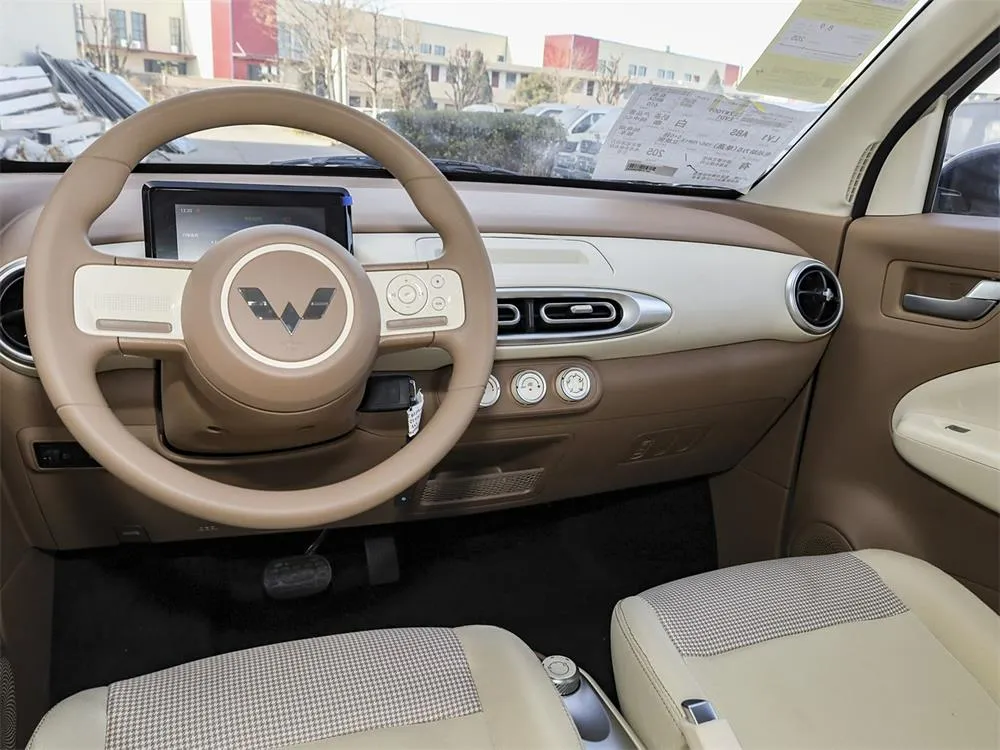
Performance & Engineering
Performance engineering in ODM Chinese EV production centers on optimizing vehicle dynamics, ensuring occupant safety, and maximizing energy efficiency. Force analysis, conducted via Finite Element Analysis (FEA), is crucial for simulating crash scenarios and validating structural integrity. Suspension tuning, employing multi-link designs and adaptive dampers, aims to balance ride comfort with handling precision. Electric motor and inverter efficiency directly impacts range and performance; advanced control algorithms and optimized cooling systems are vital. Environmental resistance is paramount, necessitating robust corrosion protection, including cathodic electrodeposition (CED) coating and sealant application. The battery pack's thermal management system utilizes liquid cooling loops, employing glycol-water mixtures to maintain optimal operating temperatures. Compliance requirements are stringent, adhering to international standards such as ECE R94/95 (pedestrian safety), ECE R13 (vehicle type-approval), and ISO 26262 (functional safety). Functional implementation of advanced driver-assistance systems (ADAS), including automatic emergency braking (AEB) and lane keeping assist (LKA), requires sophisticated sensor integration (radar, lidar, cameras) and real-time data processing. Electromagnetic Compatibility (EMC) testing verifies that the vehicle's electrical systems do not interfere with other electronic devices and are immune to external electromagnetic disturbances. The integration of vehicle-to-grid (V2G) technology necessitates careful consideration of power electronics and communication protocols.
Technical Specifications
| Parameter | Unit | Typical Value (Economy Model) | Typical Value (Premium Model) |
|---|---|---|---|
| Battery Capacity | kWh | 40 | 75 |
| Range (WLTP) | km | 300 | 500 |
| Peak Power | kW | 100 | 200 |
| 0-100 km/h Acceleration | s | 9.5 | 5.5 |
| Maximum Speed | km/h | 160 | 200 |
| Curb Weight | kg | 1500 | 1800 |
Failure Mode & Maintenance
Failure modes in ODM-produced EVs are diverse, spanning battery degradation, motor winding failures, and structural component fatigue. Battery degradation, primarily caused by calendar aging and repeated charge-discharge cycles, manifests as reduced capacity and increased internal resistance. Thermal runaway, a critical safety concern, can occur due to cell damage or overcharging. Motor winding failures often result from insulation breakdown due to thermal stress and vibration. Structural failures, particularly in the chassis and suspension components, can arise from fatigue cracking under repeated loading. Delamination of composite body panels can occur due to moisture ingress and UV degradation. Oxidation of electrical contacts leads to increased resistance and intermittent connectivity. Preventative maintenance is crucial. Battery health monitoring via the BMS provides early warning of capacity loss and potential thermal issues. Regular inspection of electrical connectors and wiring harnesses is essential to detect corrosion. Suspension component inspection and lubrication are critical for preventing fatigue failures. Coolant flushing and replacement are necessary to maintain thermal management system efficiency. Diagnostic trouble codes (DTCs) retrieved via the OBD-II port facilitate rapid identification of system malfunctions. Long-term storage requires maintaining the battery state of charge within specified limits and employing trickle charging to prevent sulfation. Periodic torque checks on critical fasteners are also recommended.
Industry FAQ
Q: What is the typical lead time for developing a new EV model with an ODM provider?
A: The lead time can vary considerably based on the complexity of the design and the level of customization required. However, a typical timeline ranges from 18 to 36 months, encompassing concept design, prototyping, validation, and pilot production. This is generally faster than undertaking a full in-house development program.
Q: How does an ODM ensure intellectual property (IP) protection for a client's design?
A: Reputable ODM providers implement robust IP protection protocols, including Non-Disclosure Agreements (NDAs), strict access control to design data, and careful management of manufacturing processes to prevent unauthorized replication. Ownership of the design IP typically remains with the client.
Q: What level of customization is typically available through an ODM partnership?
A: The level of customization can be extensive, ranging from minor cosmetic changes (e.g., interior trim, exterior paint) to significant modifications of the vehicle platform and powertrain. However, radical departures from the existing platform architecture may require longer development times and higher costs.
Q: What quality control standards are employed by ODM Chinese EV companies?
A: Most reputable ODMs adhere to international quality management systems such as IATF 16949, which is the automotive industry's standard for quality management. They employ statistical process control (SPC), incoming material inspection, in-process inspection, and final vehicle inspection to ensure consistent quality.
Q: How do ODM providers handle homologation and certification for different global markets?
A: ODM providers possess in-house expertise in navigating the complex regulatory landscape of various global markets. They manage the homologation process, conducting necessary testing and documentation to ensure compliance with local safety and emission standards. This typically includes obtaining certifications such as CE marking (Europe) and EPA/DOT approval (United States).
Conclusion
The rise of ODM Chinese EV companies represents a paradigm shift in the automotive industry, offering a compelling alternative to traditional OEM development models. Their expertise in scalable platform development, cost-effective manufacturing, and navigating complex regulatory environments positions them as crucial partners for international firms seeking to enter or expand within the rapidly growing EV market. The successful integration of advanced material science, robust engineering principles, and stringent quality control measures is foundational to their capabilities.
Looking ahead, the ongoing advancements in battery technology, autonomous driving systems, and connected car features will further drive innovation within this sector. Continued focus on sustainable manufacturing practices and circular economy principles will be essential for mitigating environmental impact. The ODM model’s agility and responsiveness will likely become increasingly valuable as the EV landscape continues to evolve and consumer demands shift.