
Apr . 01, 2024 17:55 Back to list
china new electric cars manufacturer Material Science and Manufacturing
Introduction
The burgeoning market for New Energy Vehicles (NEVs) in China represents a significant shift in the global automotive landscape. Manufacturers of these vehicles, often referred to as ‘china new electric cars manufacturer’, are rapidly evolving, transitioning from early adopters of battery electric technology to sophisticated producers incorporating advanced materials, intelligent manufacturing techniques, and complex battery management systems. These manufacturers occupy a pivotal position within a complex supply chain, sourcing materials ranging from lithium and cobalt for batteries to high-strength steel and aluminum alloys for vehicle structures. This guide provides a comprehensive technical overview of the materials, manufacturing processes, performance characteristics, potential failure modes, and maintenance protocols associated with NEVs produced by Chinese manufacturers. Core performance aspects revolve around battery energy density, charging infrastructure compatibility, thermal management, and achieving stringent safety standards aligned with international regulations. The competitive pressure within this industry is immense, driving continuous innovation in areas such as autonomous driving capabilities, connected car services, and overall vehicle efficiency.
Material Science & Manufacturing
The material composition of a modern Chinese NEV is considerably different from that of a traditional internal combustion engine vehicle. High-strength low-alloy (HSLA) steels are extensively used in the chassis and body-in-white (BIW) construction, chosen for their balance of strength, ductility, and weldability. These steels often undergo advanced forming processes like hot stamping, which increases their yield strength and crashworthiness. Aluminum alloys, particularly 6061 and 7075 series, are increasingly employed in body panels, battery enclosures, and suspension components to reduce weight. Battery packs are predominantly constructed using lithium-ion cells, utilizing cathode materials like Lithium Nickel Manganese Cobalt Oxide (NMC) or Lithium Iron Phosphate (LFP), each offering distinct trade-offs between energy density, cost, and thermal stability. Electrolyte composition is also critical, with advancements focusing on solid-state electrolytes to enhance safety and energy density. Manufacturing processes include large-scale aluminum die casting for structural components, robotic welding for BIW assembly, and automated cell-to-pack (CTP) or cell-to-body (CTB) technologies for battery integration, which eliminate intermediate modules and increase volumetric energy density. Quality control is paramount, employing non-destructive testing (NDT) methods like ultrasonic testing and X-ray inspection to identify defects in welds and composite materials. Surface treatments such as e-coating and powder coating are crucial for corrosion protection, particularly in regions with high humidity and exposure to road salts.
Performance & Engineering
Performance evaluation of Chinese NEVs encompasses a multifaceted analysis of powertrain efficiency, thermal management, vehicle dynamics, and safety systems. The electric motor, typically a permanent magnet synchronous motor (PMSM) or an induction motor, undergoes rigorous testing to determine its power output, torque characteristics, and efficiency across a range of operating conditions. Battery thermal management is critical to maintaining optimal performance and lifespan, employing liquid cooling systems utilizing glycol-water mixtures to regulate cell temperature. Finite element analysis (FEA) is widely used to optimize the structural integrity of the vehicle, simulating crash scenarios and identifying potential weak points. The regenerative braking system’s efficiency is evaluated to maximize energy recovery during deceleration. Adherence to international safety standards, such as those defined by the Economic Commission for Europe (ECE) and the United Nations (UN), is essential. This includes crash testing, electromagnetic compatibility (EMC) testing, and battery safety certifications. The vehicle's center of gravity and suspension geometry are optimized for handling and stability, with simulations and physical testing conducted to assess roll stability, yaw control, and braking performance. Increasingly, over-the-air (OTA) updates are utilized for software improvements and feature enhancements, necessitating robust cybersecurity measures to prevent unauthorized access and manipulation.
Technical Specifications
| Battery Capacity (kWh) | Range (km) - CLTC | 0-100 km/h Acceleration (s) | Maximum Power (kW) |
|---|---|---|---|
| 55 | 500 | 6.5 | 150 |
| 75 | 650 | 4.8 | 200 |
| 90 | 750 | 4.2 | 250 |
| 110 | 850 | 3.8 | 300 |
| 130 | 950 | 3.5 | 350 |
| 150 | 1050 | 3.2 | 400 |
Failure Mode & Maintenance
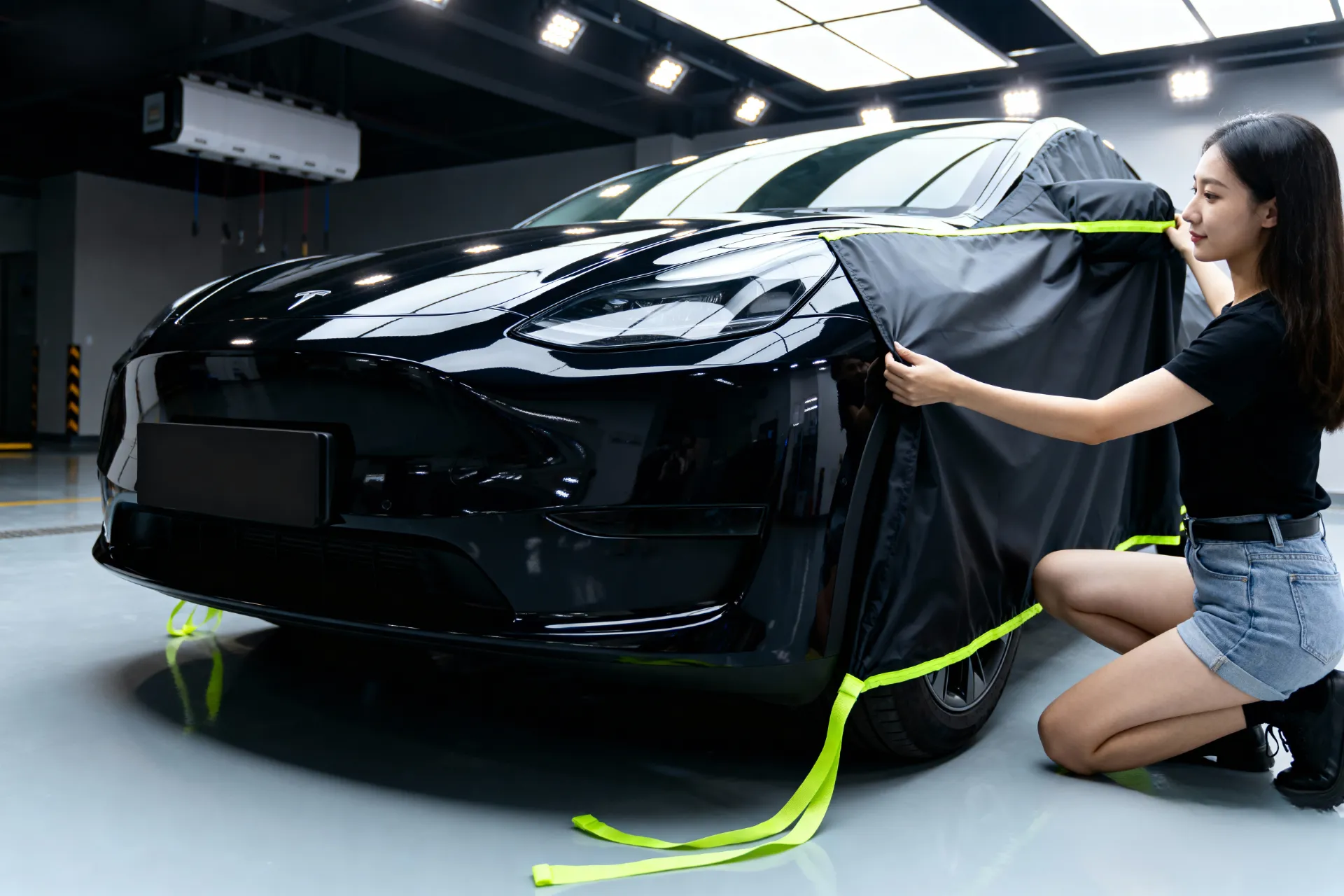
Failure modes in Chinese NEVs can be categorized into battery-related, powertrain-related, and structural failures. Battery degradation is a primary concern, manifesting as reduced capacity, increased internal resistance, and diminished performance. This is often accelerated by prolonged exposure to high temperatures or deep discharge cycles. Powertrain failures can include motor winding insulation breakdown, inverter component failure (IGBTs being particularly susceptible), and bearing wear. Structural failures may involve corrosion of steel components, cracking of aluminum alloy parts due to fatigue, and delamination of composite materials. Thermal runaway in the battery pack represents a critical safety hazard, triggered by short circuits, overcharging, or physical damage. Maintenance protocols include regular battery health checks using diagnostic software, coolant level monitoring, brake system inspections (including regenerative braking components), and tire pressure adjustments. Preventative maintenance should also address corrosion protection through periodic application of protective coatings. The diagnostic port should be regularly accessed to check for fault codes and ensure proper operation of all vehicle systems. Proper storage of the vehicle during extended periods of inactivity is critical to mitigate battery degradation.
Industry FAQ
Q: What are the primary differences in battery chemistry employed by leading Chinese NEV manufacturers?
A: Leading manufacturers are diversifying. While LFP is prevalent due to its cost-effectiveness and enhanced thermal stability, particularly for entry-level models, NMC (Nickel Manganese Cobalt Oxide) variants with higher nickel content are increasingly used in premium vehicles to maximize energy density and range. Some manufacturers are also actively researching and developing solid-state batteries, although widespread adoption remains several years away. The choice depends on balancing cost, performance, safety, and supply chain considerations.
Q: How do Chinese NEV manufacturers address the challenge of battery thermal management in cold climates?
A: Advanced thermal management systems are crucial. These typically include pre-heating the battery pack before charging or driving in cold temperatures, utilizing heat pumps to efficiently extract heat from the environment, and employing sophisticated algorithms to optimize coolant flow based on battery temperature and load. Some manufacturers are also integrating phase change materials (PCMs) into the battery pack for passive thermal regulation.
Q: What is the expected lifespan of the battery pack in a typical Chinese NEV, and what warranties are offered?
A: Battery lifespan is typically rated for 8-10 years or 160,000-200,000 kilometers. Warranties generally cover 5-8 years or 120,000-160,000 kilometers, guaranteeing a minimum remaining capacity (e.g., 70% of original capacity). Some manufacturers offer extended warranties or battery replacement programs.
Q: How are Chinese NEV manufacturers complying with evolving cybersecurity regulations related to connected car features?
A: Cybersecurity is a significant focus. Manufacturers are implementing multi-layered security architectures, including intrusion detection systems, secure boot processes, and data encryption. They are also adhering to national cybersecurity standards and actively participating in vulnerability assessments and penetration testing to identify and address potential threats.
Q: What steps are being taken to improve the recyclability of batteries used in Chinese NEVs?
A: China has established a comprehensive battery recycling infrastructure, supported by government incentives and regulations. Manufacturers are collaborating with recycling companies to develop efficient and environmentally sound battery disassembly and material recovery processes. Focus is on recovering valuable materials such as lithium, cobalt, nickel, and manganese. Battery passports, containing information about the battery’s composition and history, are being implemented to facilitate tracking and recycling.
Conclusion
The Chinese NEV industry represents a rapidly evolving technological landscape, characterized by aggressive innovation and a strong focus on cost reduction. The integration of advanced materials, sophisticated manufacturing processes, and intelligent thermal management systems is driving improvements in vehicle performance, range, and safety. Addressing challenges related to battery degradation, cybersecurity, and recyclability will be crucial for the sustainable growth of this industry. The increasing sophistication of Chinese NEV manufacturers positions them as key players in the global transition towards electric mobility.
Future development will likely center around advancements in solid-state battery technology, autonomous driving capabilities, and the expansion of charging infrastructure. Continued investment in research and development, coupled with supportive government policies, will be essential to maintain China's competitive edge in the NEV market. The trend towards vehicle-to-grid (V2G) technology also presents opportunities for Chinese NEVs to contribute to grid stabilization and energy management.