
Apr . 01, 2024 17:55 Back to list
buy new suv products Materials and Manufacturing Analysis
Introduction
Sport Utility Vehicles (SUVs) represent a significant segment of the automotive market, consistently demonstrating robust demand across diverse demographics. These vehicles, categorized by their typically larger stature, increased ground clearance, and often, all-wheel-drive capabilities, have evolved from rugged, body-on-frame utility vehicles to increasingly sophisticated, car-based crossover designs. This technical guide provides an in-depth analysis of the materials, manufacturing processes, performance characteristics, potential failure modes, and relevant industry standards associated with modern SUVs. The SUV’s position within the automotive supply chain is complex, requiring integration of components from steel and aluminum production, polymer chemistry for interior and exterior elements, sophisticated electronic control systems, and advanced tire technology. Core performance considerations focus on safety (crashworthiness, active safety systems), fuel efficiency (influenced by weight reduction and powertrain optimization), and durability (resistance to environmental factors and long-term mechanical stresses). The consumer demand for SUVs is driven by a perceived sense of security, increased cargo capacity, and adaptability to varied terrain, necessitating a high degree of engineering rigor and materials selection to meet both performance expectations and regulatory requirements.
Material Science & Manufacturing
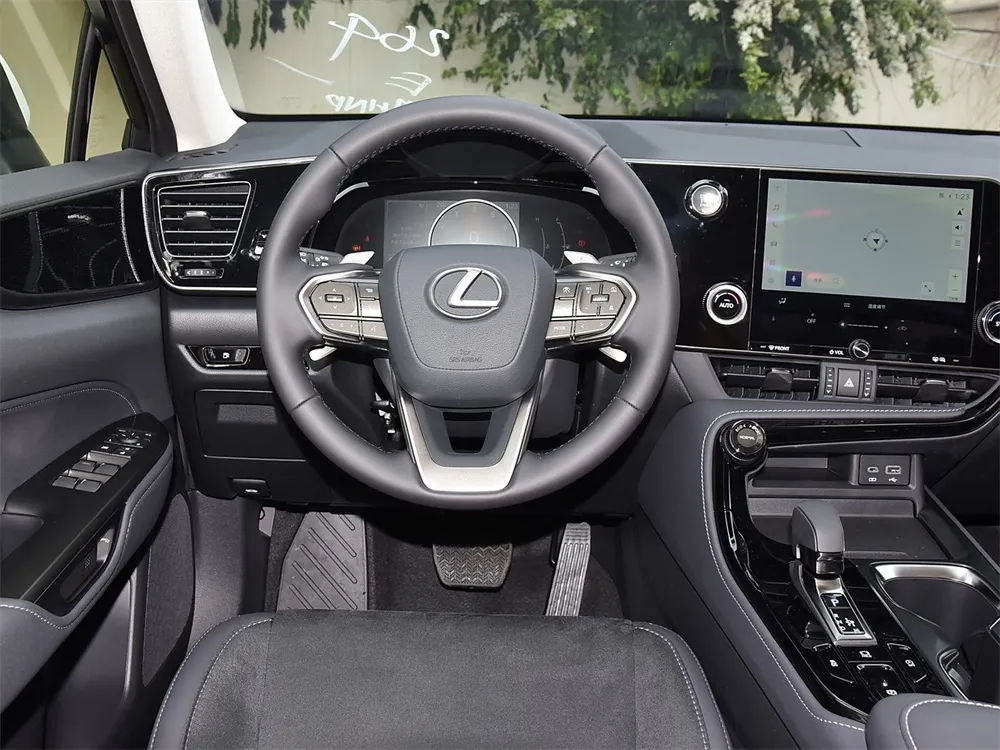
The modern SUV’s construction relies heavily on advanced high-strength steels (AHSS) for the body-in-white (BIW), contributing to both structural integrity and weight reduction. These steels, characterized by complex alloying compositions (e.g., manganese, silicon, chromium) and heat treatments, exhibit yield strengths exceeding 550 MPa. Aluminum alloys, particularly 5052 and 6061, are increasingly used in body panels, hoods, and liftgates to further minimize weight. Manufacturing processes for the BIW involve sophisticated robotic welding techniques, including laser welding and resistance spot welding. Parameter control is crucial: laser welding requires precise control of laser power, travel speed, and shielding gas composition to prevent porosity and ensure weld penetration. Resistance spot welding necessitates careful monitoring of welding current, electrode force, and weld time to achieve optimal nugget size and weld strength. Interior components utilize a diverse range of polymers. Polypropylene (PP) is common for dashboards and interior trim due to its low density and good impact resistance. Polyurethane (PU) foam provides cushioning for seats, while acrylonitrile butadiene styrene (ABS) is used for hard interior panels. Exterior trim often incorporates polycarbonate (PC) for its high impact strength and UV resistance. Manufacturing of these polymer components utilizes injection molding, requiring precise control of mold temperature, injection pressure, and cooling rates to minimize warping and ensure dimensional accuracy. Finally, glass composition (typically soda-lime glass with boron oxide for increased thermal shock resistance) and manufacturing processes (float glass method) are critical for windshields and windows, impacting visibility and safety.
Performance & Engineering
SUV performance is fundamentally governed by force analysis relating to crashworthiness and handling dynamics. During a frontal impact, energy absorption is critical, relying on the programmed deformation of the crumple zones constructed from AHSS. Finite Element Analysis (FEA) is extensively used to optimize the geometry of these zones to maximize energy dissipation while minimizing intrusion into the passenger compartment. Rollover stability is another key performance parameter, addressed through lowering the center of gravity (achieved via optimized weight distribution and suspension design) and employing Electronic Stability Control (ESC) systems. ESC utilizes sensors to detect loss of traction and selectively applies braking force to individual wheels to maintain vehicle stability. Environmental resistance is paramount. Corrosion prevention is achieved through multi-layer paint systems (e-coat, primer, basecoat, clearcoat) and the use of corrosion-resistant alloys. The e-coat provides cathodic protection, preventing oxidation of the underlying steel. Powertrain engineering focuses on optimizing fuel efficiency through engine downsizing, turbocharging, and the implementation of direct injection technology. Compliance requirements are stringent, dictated by regulatory bodies such as the NHTSA (National Highway Traffic Safety Administration) and the EPA (Environmental Protection Agency). These regulations mandate specific performance levels for crash safety, emissions, and fuel economy.
Technical Specifications
| Parameter | Compact SUV (e.g., Honda CR-V) | Mid-Size SUV (e.g., Toyota 4Runner) | Luxury SUV (e.g., BMW X5) |
|---|---|---|---|
| Curb Weight (kg) | 1550 - 1650 | 2000 - 2200 | 2100 - 2400 |
| Drag Coefficient (Cd) | 0.30 - 0.33 | 0.32 - 0.35 | 0.28 - 0.31 |
| Frontal Area (m²) | 2.3 - 2.5 | 2.6 - 2.8 | 2.7 - 2.9 |
| Suspension Type (Front) | MacPherson Strut | Double Wishbone | Double Wishbone w/ Air Suspension |
| Braking Distance (0-60 mph, m) | 35 - 38 | 37 - 40 | 33 - 36 |
| Ground Clearance (mm) | 175 - 190 | 245 - 250 | 205 - 210 |
Failure Mode & Maintenance
SUVs, due to their operational demands and complex systems, are susceptible to several failure modes. Fatigue cracking in the chassis and suspension components is common, particularly in areas subjected to high stress concentrations (e.g., weld joints, suspension mounting points). This is exacerbated by exposure to road salt and corrosive environments. Delamination of the paint system can occur due to UV exposure and poor adhesion, leading to corrosion of the underlying metal. Tire degradation, manifested as tread wear, sidewall cracking, and loss of inflation pressure, is a frequent issue, influenced by driving habits, road conditions, and tire compound. Oxidation of rubber components (e.g., hoses, seals) can lead to leaks and functional failure. Maintenance is critical to mitigate these risks. Regular inspections for corrosion, cracks, and wear are essential. Suspension components should be inspected and replaced as needed. Tire rotations, balancing, and proper inflation are crucial for extending tire life and maintaining optimal handling. Coolant flushes, oil changes, and brake fluid replacements are vital for preventing corrosion within the engine and braking systems. The proper operation of the HVAC system is essential to prevent condensation buildup, which can lead to corrosion in the floor pans. Adherence to manufacturer-recommended maintenance schedules is paramount to ensuring long-term reliability and safety.
Industry FAQ
Q: What is the significance of AHSS grades in SUV construction, and how do they impact crash performance?
A: Advanced High-Strength Steels (AHSS) are crucial for enhancing crash performance in SUVs. Compared to conventional steels, AHSS offers significantly higher yield strengths, allowing for thinner gauge material to achieve equivalent structural rigidity. This weight reduction improves fuel efficiency and handling. During a collision, the programmed deformation of AHSS components in crumple zones effectively absorbs impact energy, minimizing deceleration forces experienced by occupants. Different AHSS grades (e.g., DP600, TRIP700) offer varying combinations of strength and ductility, tailored to specific application requirements within the BIW.
Q: How does the use of aluminum alloys affect the corrosion resistance of an SUV body?
A: While aluminum alloys offer weight savings, they are more susceptible to galvanic corrosion when in contact with dissimilar metals like steel. This is why careful attention must be paid to material selection and the implementation of corrosion prevention strategies. Isolation techniques, such as using non-conductive barriers or applying protective coatings, are employed to prevent galvanic corrosion. Anodizing, a process that creates a protective oxide layer on the aluminum surface, further enhances corrosion resistance. Modern SUV manufacturing often utilizes aluminum alloys with optimized alloying elements to improve their inherent corrosion resistance.
Q: What role does Electronic Stability Control (ESC) play in SUV safety, and what are its limitations?
A: Electronic Stability Control (ESC) is a vital active safety system in SUVs, mitigating the risk of skidding and loss of control. ESC utilizes sensors to monitor vehicle dynamics (steering angle, yaw rate, wheel speed) and compares the driver’s intended path to the vehicle’s actual trajectory. If a discrepancy is detected, ESC selectively applies braking force to individual wheels to counteract the skid and restore directional stability. However, ESC has limitations. It cannot overcome the laws of physics; it can assist but not prevent a loss of control if the driver exceeds the vehicle's physical limits (e.g., excessive speed, abrupt maneuvers). Additionally, ESC effectiveness is reduced on surfaces with very low friction (e.g., ice, snow).
Q: How are modern SUV tires engineered to balance ride comfort, handling performance, and durability?
A: Modern SUV tires represent a complex engineering compromise between ride comfort, handling performance, and durability. Tire tread pattern design plays a crucial role, with different patterns optimized for specific conditions (e.g., all-season, winter, off-road). Tire compound composition is carefully selected to balance rolling resistance (for fuel efficiency), grip (for handling and braking), and wear resistance (for durability). Carcass construction (radial vs. bias-ply) influences ride comfort and handling. Sidewall stiffness affects handling responsiveness. SUV tires are often reinforced with extra layers of ply to withstand higher loads and provide greater durability.
Q: What are the key considerations when selecting brake materials for a heavy SUV, and how do different materials compare?
A: Selecting brake materials for a heavy SUV requires careful consideration of heat dissipation, friction coefficient, wear resistance, and cost. Cast iron rotors are the most common due to their cost-effectiveness and adequate performance for most driving conditions. However, they are prone to warping at high temperatures. Carbon ceramic rotors offer superior heat dissipation and reduced weight, but are significantly more expensive. Brake pad materials also vary; organic pads offer good noise characteristics but lower friction coefficients and faster wear. Semi-metallic pads provide a balance of performance and durability. Ceramic pads offer good performance and low dust, but may be more expensive. The choice of materials depends on the intended use of the SUV and the driver's performance expectations.
Conclusion
The modern SUV represents a highly engineered vehicle, integrating advanced materials science, sophisticated manufacturing processes, and complex engineering principles to achieve a balance of performance, safety, and durability. The continued trend towards weight reduction, driven by fuel efficiency and emissions regulations, will necessitate further innovation in materials and manufacturing techniques. The integration of advanced driver-assistance systems (ADAS) and autonomous driving features will further enhance SUV safety and convenience, demanding increasingly robust and reliable electronic control systems.
Looking forward, the development of more sustainable materials and manufacturing processes will be crucial for minimizing the environmental impact of SUVs. This includes the increased use of recycled materials, bio-based polymers, and energy-efficient production methods. The optimization of vehicle aerodynamics and powertrain efficiency will continue to be paramount, driven by increasingly stringent regulatory requirements. The future of the SUV lies in its ability to adapt to evolving consumer demands and environmental challenges through continuous innovation and engineering excellence.