
Apr . 01, 2024 17:55 Back to list
new electric vehicle Performance Engineering

Introduction
New electric vehicles (NEVs) represent a significant paradigm shift in the automotive industry, transitioning from internal combustion engine (ICE) propulsion to battery-electric (BEV), plug-in hybrid electric (PHEV), and fuel cell electric vehicle (FCEV) technologies. This guide details the intricate engineering and material science underpinning NEVs, focusing on core performance metrics and potential failure modes. The industry is currently grappling with challenges related to battery technology, charging infrastructure, thermal management, and the lifecycle analysis of materials used in vehicle construction. NEVs occupy a crucial position in the automotive supply chain, demanding integration of advanced materials, precision manufacturing, and rigorous adherence to safety and environmental standards. Key performance indicators include energy density of battery packs, charging times, range, and overall vehicle efficiency, all directly impacting consumer adoption and environmental sustainability.
Material Science & Manufacturing
The construction of a new electric vehicle relies heavily on a diverse range of materials exhibiting specific physical and chemical properties. The battery pack, typically employing Lithium-ion chemistry (NMC, NCA, LFP), necessitates materials with high ionic conductivity, thermal stability, and electrochemical resilience. Electrode materials utilize graphite, nickel, manganese, cobalt, and lithium salts. Electrolyte formulations involve organic carbonates and lithium salts, demanding purity and controlled viscosity. Separators are typically polyolefin-based, requiring high porosity and dielectric strength. The vehicle chassis increasingly employs advanced high-strength steels (AHSS), aluminum alloys, and carbon fiber reinforced polymers (CFRP) to reduce weight and enhance structural rigidity. Manufacturing processes for battery packs involve cell formation, module assembly (typically laser welding or adhesive bonding), and pack integration with sophisticated Battery Management Systems (BMS). Body panels are often produced via stamping, hydroforming, and injection molding, followed by painting and coating processes. CFRP components utilize autoclave or resin transfer molding (RTM) techniques. Critical parameter control during manufacturing includes precise control of welding parameters (temperature, pressure, time), adhesive application rates, and fiber orientation within composite structures. Chemical compatibility between battery components and vehicle materials is paramount to prevent corrosion and degradation.
Performance & Engineering
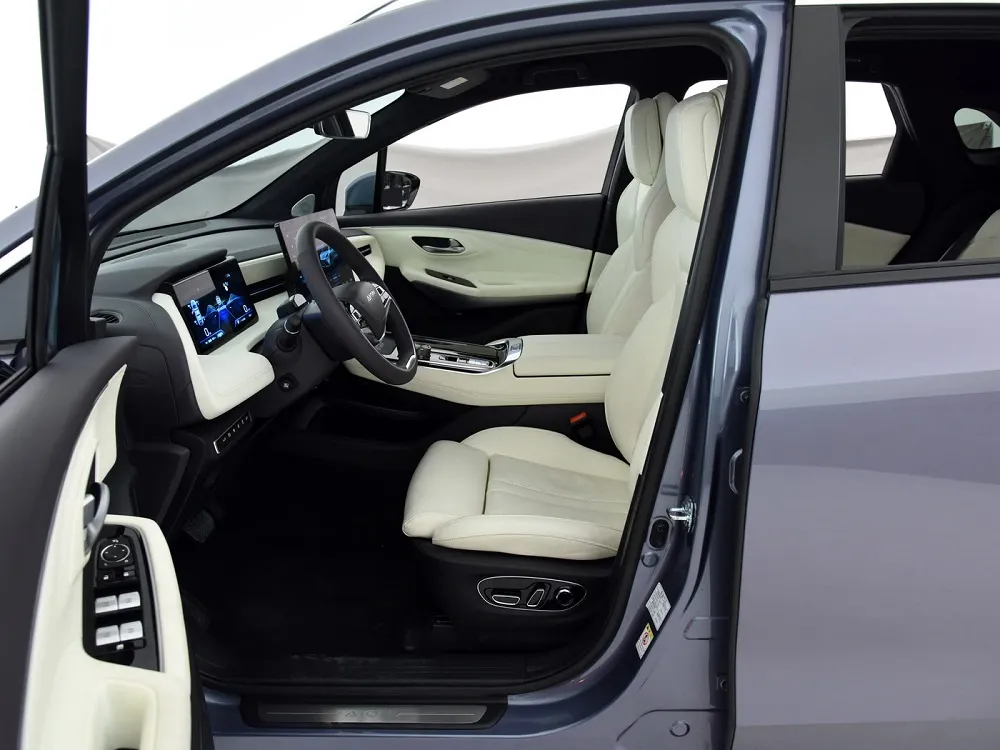
Performance engineering in NEVs centers around optimizing energy efficiency, maximizing range, and ensuring structural integrity under dynamic loading. Force analysis during crash scenarios utilizes Finite Element Analysis (FEA) to model component deformation and energy absorption. Battery thermal management is crucial to maintain optimal operating temperatures (typically 20-40°C) and prevent thermal runaway. Cooling systems employ liquid cooling, air cooling, or phase change materials (PCMs). Electric motor design focuses on maximizing torque density and minimizing energy losses. Inverter technology employs wide-bandgap semiconductors (SiC, GaN) to enhance efficiency and switching frequency. Environmental resistance testing includes exposure to extreme temperatures, humidity, salt spray, and UV radiation. Compliance requirements encompass FMVSS (Federal Motor Vehicle Safety Standards) in the US, ECE regulations in Europe, and GB standards in China. Functional implementation of regenerative braking systems requires precise control algorithms and robust electronic components. Electromagnetic Compatibility (EMC) testing is critical to mitigate interference with other electronic systems. Vehicle range estimation utilizes sophisticated models incorporating driving cycles, road gradients, and environmental conditions.
Technical Specifications
| Battery Capacity (kWh) | Range (Miles) | Charging Time (Level 2, 240V) | 0-60 mph Acceleration (Seconds) |
|---|---|---|---|
| 50 | 220 | 8 Hours | 7.5 |
| 75 | 300 | 10 Hours | 6.2 |
| 100 | 380 | 12 Hours | 4.8 |
| 120 | 450 | 14 Hours | 4.0 |
| 150 | 520 | 16 Hours | 3.5 |
| 200 | 620 | 20 Hours | 3.0 |
Failure Mode & Maintenance
Failure modes in NEVs are diverse, stemming from battery degradation, motor failures, power electronics malfunctions, and structural issues. Battery degradation manifests as capacity fade, increased internal resistance, and reduced cycle life, often attributed to lithium plating, electrolyte decomposition, and electrode material dissolution. Thermal runaway, a critical safety concern, arises from uncontrolled exothermic reactions within the battery pack. Motor failures can result from bearing wear, winding insulation breakdown, or rotor defects. Inverter failures are often linked to semiconductor device burnout or capacitor degradation. Structural failures can arise from fatigue cracking in chassis components, delamination in CFRP structures, or corrosion in metallic parts. Maintenance solutions include regular battery health checks, thermal management system inspections, motor and inverter diagnostics, and structural integrity assessments. Proactive maintenance strategies involving data analytics and predictive modeling are crucial to minimize downtime and extend vehicle lifespan. Specific failure analysis techniques include electrochemical impedance spectroscopy (EIS) for battery diagnostics, vibration analysis for motor health monitoring, and non-destructive testing (NDT) for structural integrity evaluation. Proper handling and disposal of battery packs are essential to prevent environmental contamination.
Industry FAQ
Q: What are the primary factors influencing the long-term reliability of lithium-ion battery packs in NEVs?
A: Long-term reliability is dictated by factors like operating temperature, state of charge (SOC) management, charge/discharge rates, and the quality of battery materials and manufacturing processes. High temperatures accelerate degradation, while extreme SOC levels promote lithium plating. Optimized thermal management and sophisticated BMS algorithms are crucial for mitigating these effects. The choice of cathode chemistry (NMC, NCA, LFP) also significantly impacts cycle life and degradation rate.
Q: How does the use of CFRP impact vehicle safety and repairability compared to traditional steel construction?
A: CFRP offers a superior strength-to-weight ratio, enhancing vehicle safety through improved crash energy absorption. However, CFRP repairs are significantly more complex and costly than steel repairs, requiring specialized equipment and expertise. Damage to CFRP can be difficult to detect visually, necessitating advanced NDT techniques. The lifecycle environmental impact of CFRP production and disposal also warrants consideration.
Q: What are the key challenges associated with achieving rapid charging times for NEVs without compromising battery lifespan?
A: Rapid charging generates substantial heat within the battery pack, potentially accelerating degradation. Mitigating this requires advanced thermal management systems capable of dissipating heat effectively. Optimizing charging algorithms to control current and voltage profiles is critical. The internal resistance of the battery and the limitations of the charging infrastructure also pose challenges.
Q: How does the integration of regenerative braking impact the overall efficiency and braking performance of an NEV?
A: Regenerative braking captures kinetic energy during deceleration, converting it back into electrical energy stored in the battery, thereby improving overall efficiency. However, the effectiveness of regenerative braking is limited by battery SOC and temperature. Integrating regenerative braking with conventional friction brakes requires sophisticated control algorithms to ensure smooth and safe braking performance in all conditions.
Q: What are the critical considerations for ensuring electromagnetic compatibility (EMC) in NEVs, given the proliferation of electronic components?
A: EMC is paramount to prevent interference between vehicle electronics and external systems. Shielding of sensitive components, proper grounding techniques, and filtering of electromagnetic emissions are essential. Stringent EMC testing is required to ensure compliance with regulatory standards. The high-voltage components in NEVs require particular attention to minimize electromagnetic interference.
Conclusion
New electric vehicles represent a complex interplay of advanced materials, sophisticated engineering, and stringent performance requirements. Achieving widespread adoption hinges on overcoming challenges related to battery technology, charging infrastructure, and lifecycle sustainability. The intricate manufacturing processes demand precise parameter control and robust quality assurance procedures. Understanding the potential failure modes and implementing proactive maintenance strategies are critical for maximizing vehicle lifespan and ensuring safe operation.
Continued research and development in battery chemistry, power electronics, and lightweight materials will be instrumental in driving further advancements in NEV technology. Furthermore, the establishment of standardized testing protocols and comprehensive lifecycle analyses will contribute to a more sustainable and environmentally responsible automotive future. Collaboration between automotive manufacturers, battery suppliers, and research institutions is essential to accelerate innovation and address the evolving needs of the NEV market.