
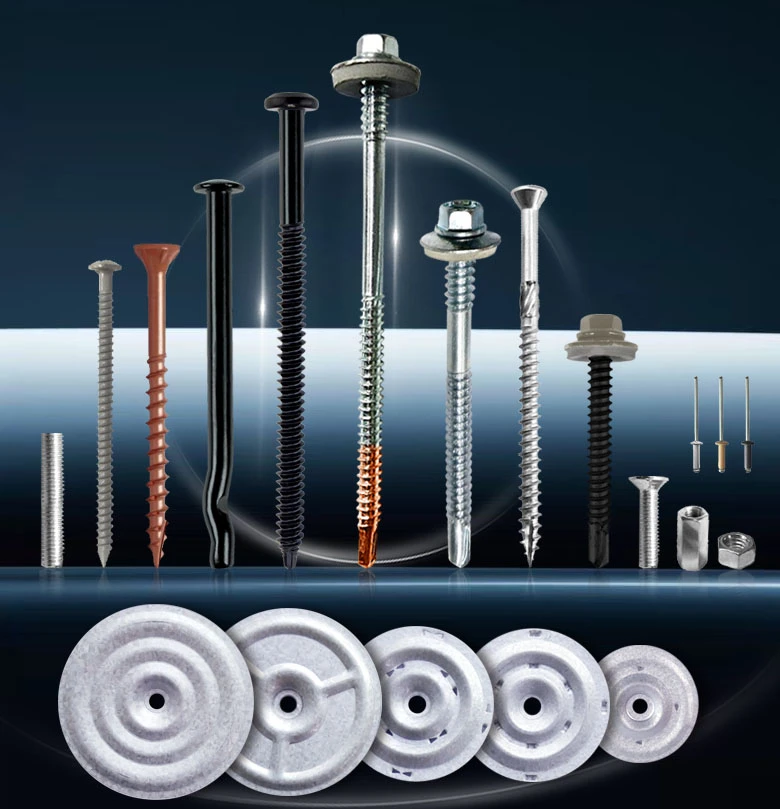
All Purpose Roofing Fastener applications have broadened considerably as electric vehicle production facilities demand higher standards of structural integrity and weather resistance. The shift toward new energy vehicles (NEVs) has placed unprecedented pressure on the entire manufacturing supply chain, from raw material extraction to final assembly, requiring every component to meet stricter performance criteria while keeping costs manageable for mass adoption.
The Evolution of Material Requirements in EV Production
The transition from internal combustion engines to electric drivetrains has fundamentally altered the material properties that manufacturers prioritize. Battery enclosures, motor housings, and structural frames now require materials that combine lightweight characteristics with exceptional thermal management capabilities. Engineers are increasingly turning to advanced composites, high-strength alloys, and innovative cementitious materials to meet these dual demands without compromising safety or production efficiency.
One area that has seen remarkable innovation is the development of non-dismantling concrete building formwork for EV factory construction, where Pump Body Casting techniques have been adapted to create precision molds for structural components. This cross-industry application demonstrates how traditional manufacturing methods are being reimagined to serve the evolving needs of the automotive sector, particularly in facilities that require rapid scaling and flexible production lines.
Structural Integrity and Thermal Management Challenges
Electric vehicles generate significant heat during rapid charging and high-load operation, particularly in the battery pack and power electronics. Managing this thermal load requires materials that can conduct heat away from sensitive components while maintaining structural stability under varying environmental conditions. Magnesium oxide-based materials have emerged as a viable solution for thermal barrier applications, offering the fire resistance and insulation properties that EV manufacturers require without adding excessive weight to the vehicle platform.
The integration of these materials into production lines demands careful attention to fastening and joining technologies. The fasteners used in EV assembly must resist galvanic corrosion when connecting dissimilar metals, maintain clamping force under thermal cycling, and provide reliable electrical grounding paths. These requirements have driven the development of specialized coating systems and thread geometries that differ significantly from those used in conventional automotive manufacturing.
Supply Chain Considerations for Emerging Technologies
As NEV production scales globally, the reliability of upstream material suppliers becomes increasingly critical. Manufacturers are seeking partners who can demonstrate consistent quality across large production runs while maintaining the flexibility to adapt to evolving design specifications. This has led to closer collaboration between automakers and material science companies, with long-term development agreements replacing traditional transactional purchasing relationships.
The shift toward localized supply chains, accelerated by recent geopolitical disruptions, has further emphasized the importance of manufacturers who can deliver both standardized components and custom-engineered solutions. Production facilities that combine material science expertise with manufacturing agility are better positioned to support the rapid iteration cycles that characterize the EV industry, where model refreshes occur more frequently than in traditional automotive segments.
The Role of Advanced Materials in Vehicle Lightweighting
Reducing vehicle weight remains one of the most effective strategies for extending electric range without increasing battery capacity. Every kilogram saved in the vehicle structure translates to measurable improvements in energy efficiency and driving dynamics. Material scientists are exploring avenues from high-strength steel formulations to natural fiber composites, with magnesium oxide boards finding applications in non-structural interior components where fire safety and acoustic performance are prioritized.
The challenge lies in balancing weight reduction with cost constraints. While carbon fiber composites offer exceptional strength-to-weight ratios, their production costs remain prohibitive for mainstream vehicle segments. This has created opportunities for hybrid material solutions that combine conventional materials with advanced coatings or reinforcement strategies, delivering performance improvements at sustainable price points.
Quality Assurance in Critical Components
The safety-critical nature of EV components demands rigorous quality assurance protocols throughout the supply chain. Battery enclosures must withstand crash impacts without compromising the integrity of the cells they contain. Motor housings require precise dimensional tolerances to maintain rotor-stator alignment at high rotational speeds. These requirements have elevated the importance of nondestructive testing methods and statistical process control in material production facilities.
Manufacturers who invest in comprehensive quality management systems, from raw material inspection to final product verification, provide their automotive partners with the confidence needed to commit to long-term production programs. The traceability of materials and processes has become a competitive differentiator, particularly as regulators worldwide implement stricter reporting requirements for vehicle components and their environmental impact.
Looking Ahead: Material Innovation as a Competitive Advantage
The next decade of NEV development will be defined by the ability of manufacturers to integrate new materials without disrupting production efficiency. Advances in computational materials science, combined with real-time process monitoring, are enabling faster qualification cycles for novel materials. Companies that maintain close collaboration with research institutions and invest in applied material science capabilities will be better positioned to capture value in the rapidly evolving EV ecosystem.
The convergence of traditional manufacturing expertise with emerging material technologies represents one of the most significant opportunities in the industrial sector today. As the automotive industry continues its transformation toward electrification, the underlying material supply chain will play an increasingly central role in determining which manufacturers can deliver the performance, safety, and affordability that consumers expect from next-generation vehicles.