
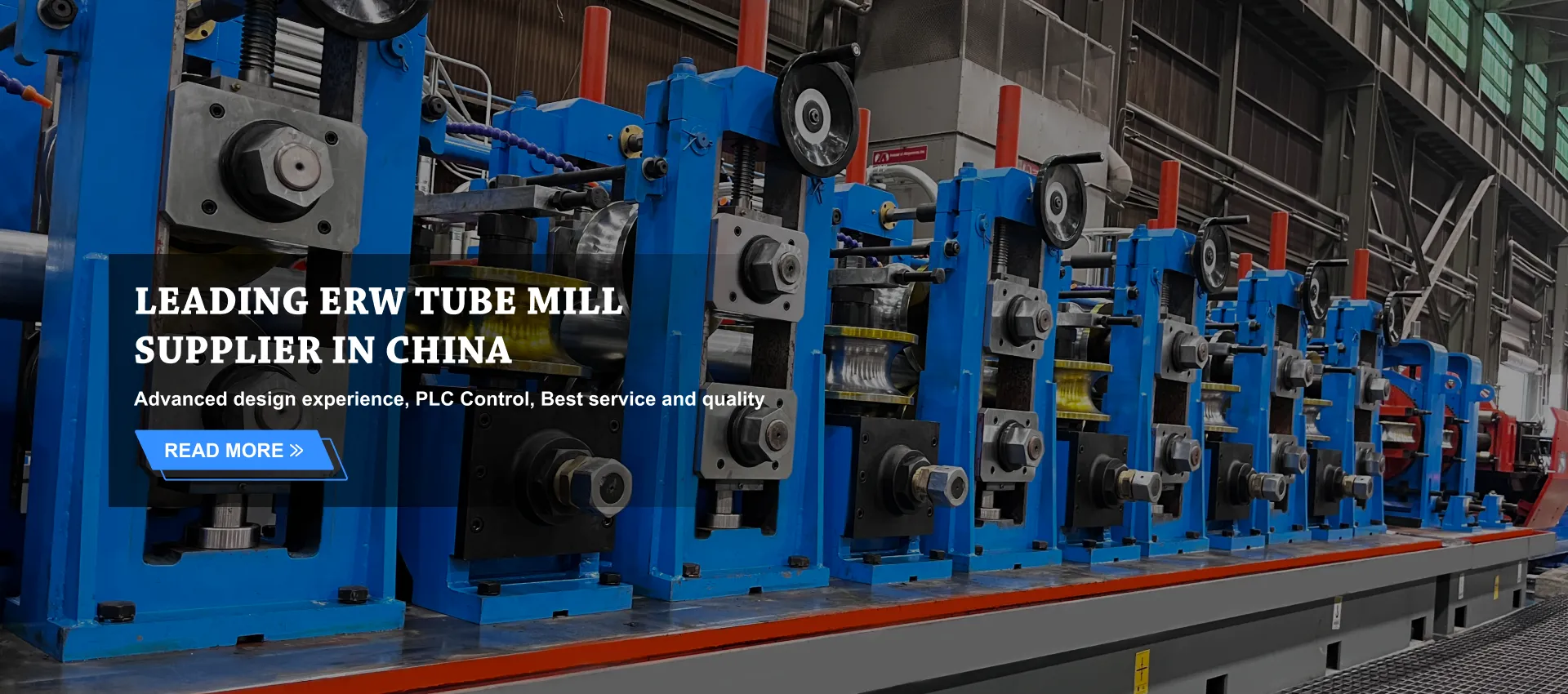
ERW Pipe Making Machine technology has quietly become a backbone of the new energy vehicle (NEV) revolution. As global automakers accelerate electrification, the demand for high-quality tubular components — from battery cooling lines to structural chassis parts — has surged. What many industry observers overlook is how upstream equipment precision directly determines the safety, efficiency, and cost of NEV production.
The Hidden Demand for Precision Tubing in NEVs
Unlike traditional internal combustion vehicles, new energy vehicles rely heavily on thermal management systems, high-voltage cable conduits, and lightweight structural frames. Every meter of tubing used in a battery pack coolant loop or a motor housing support must meet stringent dimensional tolerances and surface quality standards. This is where the capability of the forming equipment becomes critical — not just for pipe diameter consistency, but for the integrity of welds and the ability to handle advanced high-strength steels.
Industry reports indicate that the average NEV contains 30–50% more tubular content than a conventional car, driven by battery enclosure reinforcement, motor cooling circuits, and lightweight subframe designs. As production volumes scale, manufacturers are seeking forming lines that offer both flexibility and repeatability without compromising throughput.
Cold Roll Forming: A Natural Fit for NEV Structural Profiles
Cold roll forming has emerged as a preferred method for producing complex cross-section profiles used in battery tray rails, seat tracks, and crash management systems. The process enables tight tolerances over long lengths while maintaining material strength — a combination that hot forming or stamping struggles to match at scale. A critical component in this process is the Hole Punching Device, which allows manufacturers to integrate mounting holes, slots, and cutouts inline without secondary operations. This inline capability reduces handling costs and improves positional accuracy, both of which are vital when producing high-volume NEV parts.
For NEV suppliers, the ability to switch between profile shapes quickly without lengthy tooling changeovers is a competitive advantage. Modern roll forming lines with servo-driven punching systems and quick-change tooling enable exactly this kind of agility, allowing producers to serve multiple OEM programs from a single line.
Material Considerations: From High-Strength Steel to Aluminum
The NEV industry is pushing material boundaries. While aluminum remains popular for battery enclosures due to its weight advantages, advanced high-strength steels (AHSS) are gaining ground in structural applications where crash performance and cost balance are paramount. Forming equipment must handle the springback characteristics of AHSS and the reduced elongation of aluminum alloys without sacrificing line speed or surface finish.
Slitting lines and cut-to-length lines have also had to evolve. Coil processing equipment now requires edge conditioning, tight width tolerances, and burr-free edges to feed downstream forming operations reliably. The quality of the incoming strip directly affects weld stability in ERW pipe production and the consistency of roll formed profiles.
Quality Assurance and Traceability in the NEV Supply Chain
Automotive OEMs, especially in the EV space, demand full traceability of every component that goes into a vehicle. For tube and profile manufacturers, this means integrating inspection systems directly into the forming line. Eddy current testing, ultrasonic weld inspection, and dimensional gauging are now standard requirements on ERW mills supplying the automotive sector. The ability to reject defective material in real time and log production data for each piece is no longer optional — it is a contractual necessity.
Equipment suppliers that can deliver integrated inspection and data collection capabilities alongside the forming machinery are better positioned to serve the NEV market. This holistic approach to line design — where mechanical forming, punching, testing, and data logging are unified — reduces the qualification burden on tier suppliers and shortens the time to production approval.
Global Trends Shaping Equipment Investment Decisions
Several macro trends are influencing how NEV component manufacturers choose their forming equipment:
- Regionalization of supply chains: Automakers are pushing suppliers to establish production close to assembly plants, driving demand for modular, easy-to-install forming lines that can be commissioned quickly in new locations.
- Multi-material capability: Lines that can handle both steel and aluminum with minimal changeover time are increasingly preferred, as OEMs shift material strategies between model generations.
- Energy efficiency: With energy costs rising, forming equipment that reduces power consumption through servo-driven systems and optimized heating (for induction welding) is gaining traction.
- Digital integration: The ability to connect forming lines to MES and ERP systems for real-time production monitoring is becoming a baseline requirement for new investments.
Looking Ahead: What the Next Generation of NEV Platforms Will Require
As battery technology evolves and cell-to-pack designs eliminate modules, the thermal management requirements will become even more demanding. Future NEV platforms will likely use larger-diameter coolant tubes, more complex extruded profiles for structural battery enclosures, and higher-strength materials to offset the weight of larger battery packs. This will push the limits of existing ERW pipe mills and roll forming lines, requiring equipment upgrades in terms of power, precision, and automation.
For the supply chain, the message is clear: investing in flexible, high-precision forming technology today is not just about meeting current production volumes — it is about being ready for the next wave of NEV design innovations. The equipment choices made now will determine which suppliers can scale with the market and which will be left behind as the industry accelerates toward full electrification.
This article is part of a series examining the industrial equipment and materials that support the global transition to electric mobility. The author has over a decade of experience in metal forming and supply chain analysis for the automotive sector.